


Every college says it is “career-aligned” now.
Colleges have employer advisory boards, internships, defined career pathways, new certificates and microcredentials, employer partnership teams, and workforce task forces. But after speaking with Caitlyn Brazill, President of Per Scholas, we left with a harder question:
If job attainment is not your operating metric, are you really career-aligned?
Per Scholas has spent three decades achieving what higher ed increasingly states as its goal: help learners move into high-growth careers, quickly, with no-cost training, in partnership with employers who actually need talent. The model complements traditional colleges. Caitlyn is herself a product of higher ed and taught at NYU for more than a decade. But Per Scholas is organized around a different institutional promise: focus on economic mobility now.
Here are our hottest takes from the conversation.
1. “Employer-aligned” means real jobs; everything else is marketing.
“Our most important KPI is job attainment; every person at Per Scholas knows where we stand.”
Job attainment is Per Scholas’s north star. They align everything to that goal: program design, employer engagement, curriculum, learner support, staff accountability, and institutional agility.
Caitlyn says Per Scholas has an “extreme present orientation.” The organization answers questions for customers: learners and employers. What do learners need to move into a better economic position? What do employers need right now? Where is the labor market growing? What skills and competencies would actually make someone job-ready?
This model sounds obvious, but it’s not how much of higher ed works. Colleges say they are preparing students for successful careers and want to enable economic mobility. But many institutions relegate career outcomes to the career services team. Per Scholas defines career outcomes as everyone’s central goal.
Not every college program needs to become Per Scholas. There is real value in exploration, research, and intellectual development, but institutions need to be honest with students. Are they promising economic mobility, or time and space to explore?
2. Workforce Pell got the vision right, but the plumbing wrong.
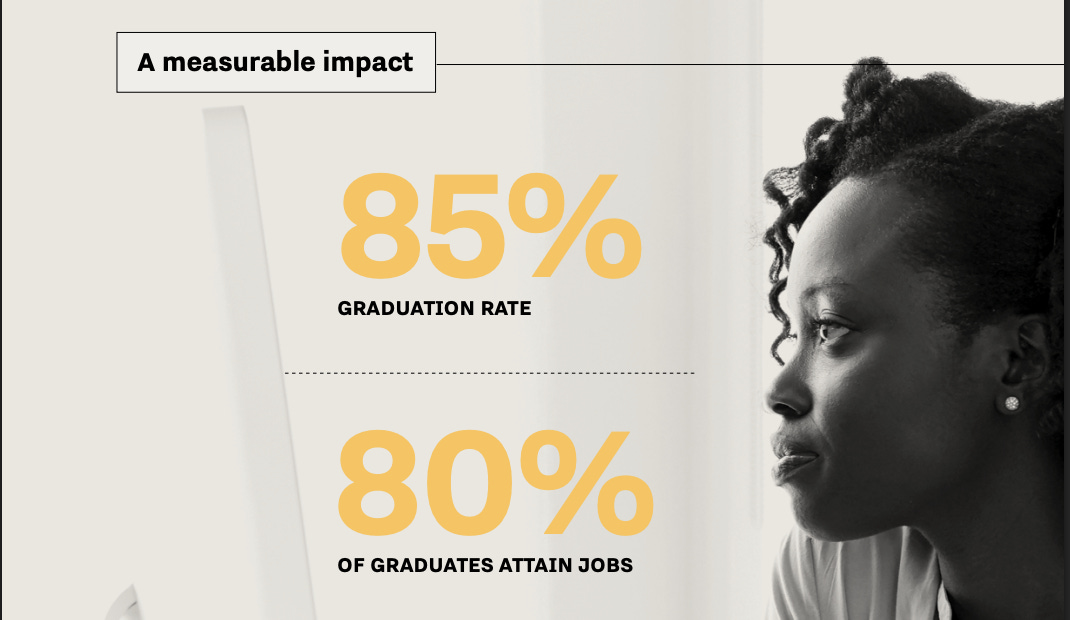
“The outcomes accountability is fantastic… achieving 70% graduation, 70% job attainment, that looks a lot like the outcomes we’ve been holding ourselves to for 30 years.”
For years, the federal financial aid system has treated traditional degree programs as the default path for low-income students. Financial aid systems mostly excluded any short-term, employment-focused programs. The Department of Education’s Workforce Pell Grant Program changes that. The program funds accelerated, cohort-based, employer-aligned training. Not just degrees.
Caitlyn is excited about the philosophical shift, but implementation details miss the mark.
Workforce Pell Grants go to accredited colleges and universities, even though other specialized workforce organizations have prepared learners for jobs through accelerated training for decades. These organizations often have the curriculum, employer relationships, instructional model, and outcome discipline that colleges need.
She described one Per Scholas partnership with community colleges in North Carolina. The college provides space and learner support, while Per Scholas brings the training model and employer connections. In theory, workforce Pell Grants should support this model. Colleges and workforce organizations each contribute, and learners get an accelerated pathway to good jobs. And yet, as Caitlyn put it, “somehow we can’t get Workforce Pell for this.”
For university leaders, it’s a reminder to move quickly. Colleges may lose their moat if they don’t deliver enough high-quality graduates through Workforce Pell-aligned programs. If policy changes, organizations beyond traditional higher ed are ready and waiting to compete.
3. AI is coming for the bottom-rung, but we still need a ladder.
“People still need an on-ramp. There will always be an entry point. Something must be the bottom of the ladder.”
In Higher Ed, AI conversations center on two panics: panic about cheating and panic about the elimination of entry-level roles for their graduates. We think differently: AI likely won’t eliminate the need for entry-level workers, but it will mean we have to train them differently.
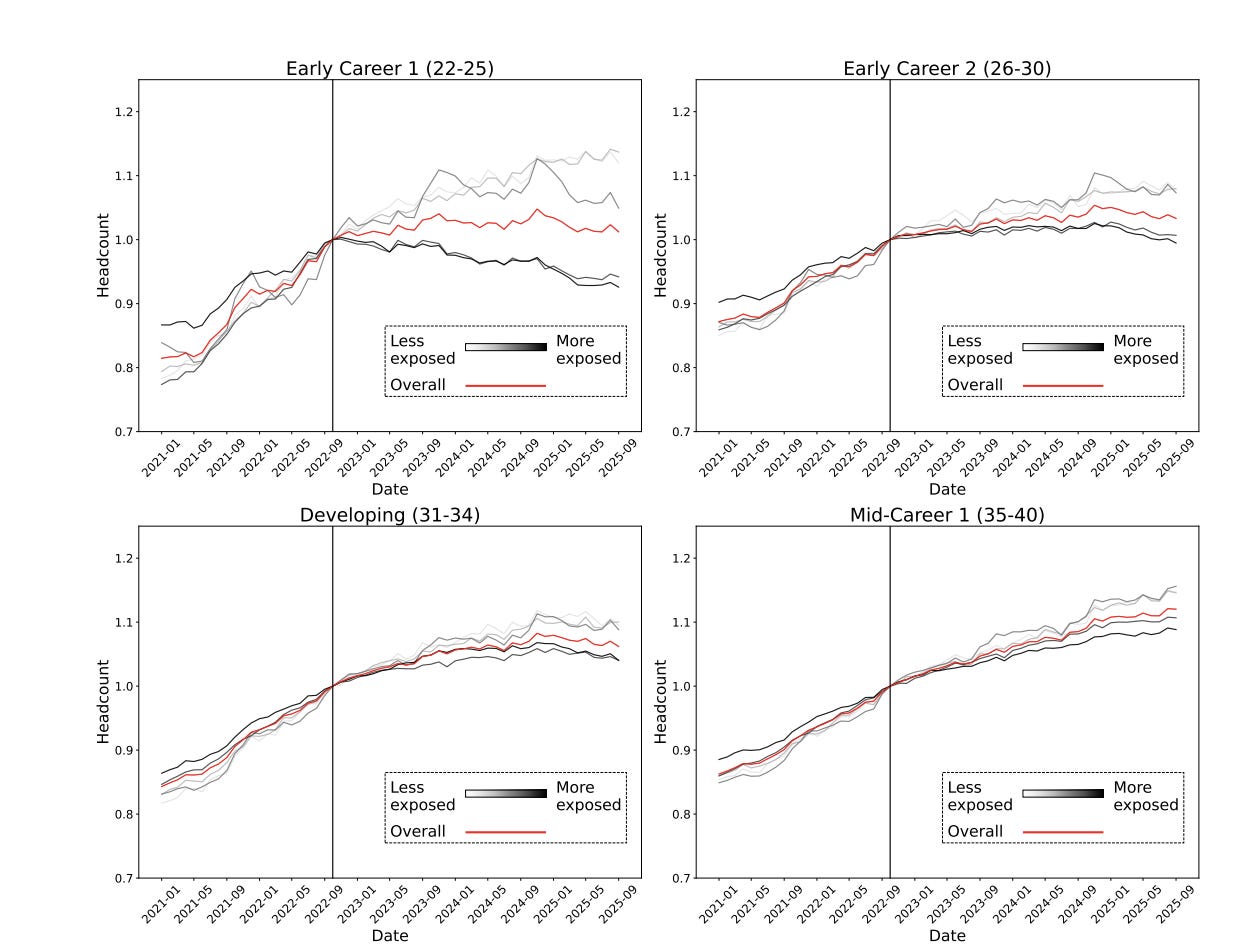
Caitlyn explains what she sees as a market failure: If employers stop hiring people to do the entry-level tasks that AI agents can perform, where do workers learn and build human judgement? It may not be in any individual company’s interest to hire someone for a job that can be partially automated, but industry still needs on-ramps into the labor market.
The next generation of workforce policy may look more like apprenticeships: subsidized roles, employer partnerships, structured practice, wage support, and intentional bridges from training into work. These will become especially important for jobs building physical infrastructure behind AI: data centers, critical facilities, security, electrical systems, heating and cooling, advanced manufacturing, and semiconductors.
Higher Ed’s AI workforce agenda cannot just be “teach students to use AI.” It has to answer a harder question: where will novices practice when employers no longer need humans for novice tasks? Students will need somewhere to develop judgment, professional habits, and real-world experience in their field of choice.
4. The 4-year degree signals skills we don’t know how to measure
“The degree requirement is meant to capture something other than knowledge.”
Caitlyn shared a story from her high school job at a mall retail store: Managers were required to have four-year degrees, even though the role came with a handbook covering nearly every decision. Meanwhile, longtime employees knew the products, customers, and operations inside and out but were ineligible because they lacked a degree.
Her point was that degrees often signal something other than knowledge, usually maturity, persistence, or the ability to navigate institutions. But degrees are imperfect proxies. Not everyone becomes mature in college, and plenty of people become mature even if they cannot afford a six-figure degree.
Caitlyn was clear that colleges can and should be excellent at knowledge-building, skill development, supervised practice, and feedback. But employers increasingly understand that young people can develop relevant skills outside of the “default” college pathway.
She argues that people need a body of skills, a way to demonstrate those skills, and supervised practice and feedback in applying those skills until they get good at them. Colleges can provide that pathway. So can other models.
Alternatives can unsettle higher ed leaders. We think competition should be energizing. Universities need to diagnose where the current model works best, program by program. Where four years isn’t necessary, innovate with a shorter, cheaper, and faster model that serves learners better.